Vinyl Fabric - A Nonwoven Plastic
Vinyl fabric is a nonwoven plastic made from polyurethane. Vinyl can be used to describe films, plastic laminates and PVC (poly-vinyl chloride). The term vinyl is also sometimes used interchangeably with pleather or synthetic leather.
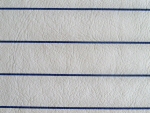
Fabric Characteristics:
• Nonwoven plastics do not fray
• They do not have a grain
• Some stretch more widthwise than lengthwise
• If used for garments they cannot be let out
• They tear easily when stressed
• They stick to the bottom of the presser foot
• They don’t feed through the sewing machine presser foot properly
• They are easily damaged by a hot iron
• Some crease permanently when left folded
• They do not breathe
• They are uncomfortable to wear in hot weather
• Some crack or yellow with age
• Some get sticky when dry cleaned or as they age
• Most are easy to clean with a damp cloth
• Many are stained easily by ink or lipstick
Working With These Fabrics Requires:
• Sewing machine needles recommended are 70/10 sharps or universals for light weight fabric and 140/16 sharps for heavier weight fabric
• Hand sewing needles sizes 5-7
• Sewing machine setting of 3.5mm recommended
• Sewing machine feet should be Teflon or roller foot
• Thread should be good quality polyester
• Tools and equipment recommended are sharp scissors, sharp shears, rotary cutter and mat, fabric weights, thimble, pins to name a few
• Layout single thickness
• Marking tools recommended are adhesive dots or colored pencil on wrong side of fabric, spoked tracing wheels should not be used due to leaving holes
• Seams recommended are plain, lapped, welt, double-welt, nonwoven lapped, nonwoven flat fell
• Hems recommended fabric glue or double sided leather tape
• Seam and hem finishes recommended are fabric glue or double sided leather tape
• Linings used for outerwear
• Closures recommended are snaps with interfacing between layers, zippers on coats and jackets, invisible zippers on skirts and pants
These Fabrics Are Suitable For:
Vinyl fabric is used for upholstery projects, handbags, straight skirts, boxy jackets, vests and jean jacket trim, and raincoats.
For information about the notions, tools, and equipment required to complete a sewing project, click here to view the sewing notions home page
For more information about this family of fabrics some great references are:
Claire Shaeffer’s Fabric Sewing Guide
More Fabric Savvy by Sandra Betzina
For more interesting information about vinyl fabric go to ehow.com for some information on how to sew vinyl onto fabric
To continue exploring information about fabrics follow the links below.
Wool Fabric
Fabric Facts
Fabric Content
Return to Sewing Fabric Home Page
Return to Sewing Home Page


